Shopify Theme Blocks: Modular, Scalable Architecture for Shopify OS 2.0
Introduction
As Shopify stores grow more complex, the limitations of traditional section-based theme development become increasingly apparent. Most Shopify themes still hardcode content and logic directly into sections, leading to duplicated code, rigid layouts, and poor scalability.
With Shopify Theme Blocks, OS 2.0 introduces a modern, component-driven architecture that aligns with best practices in frontend engineering. Theme Blocks enable developers to build reusable, composable UI components that scale efficiently for merchants, agencies, and enterprise storefronts.
What Are Shopify Theme Blocks?
Shopify Theme Blocks are reusable components defined at the theme level, rather than inside individual sections. These blocks live independently and can be used across multiple sections, layouts, and even within other blocks.
Unlike traditional section blocks, Theme Blocks are not locked to a single context. A single text, image, heading, or button block can be authored once and reused throughout the theme, ensuring consistency and reducing maintenance overhead.
From Section-Centric to Component-Based Architecture
Before Theme Blocks, Shopify themes followed a section-centric model:
- Blocks were defined per section
- Similar components were repeatedly recreated
- Layout logic and content were tightly coupled
- Scaling themes increased technical debt
Theme Blocks introduce a component-based architecture:
- Blocks are created once and reused everywhere
- Sections act primarily as layout containers
- Blocks can be nested hierarchically
- Presets support default block compositions
This architectural shift mirrors modern frameworks like React and Vue, bringing Shopify theme development closer to industry standards.
Key Benefits of Shopify Theme Blocks
1. Reusable UI Components
Theme Blocks allow developers to implement reusable UI patterns across the entire storefront. Updating a block automatically propagates changes everywhere it is used, dramatically improving development efficiency.
2. Cleaner, More Maintainable Liquid Code
By centralizing block logic in /blocks/*.liquid, themes become easier to understand, debug, and extend. This separation of concerns results in cleaner Liquid templates and reduced duplication.
3. Enhanced Merchant Editing Experience
Theme Blocks provide merchants with genuine drag-and-drop flexibility inside the Shopify Customizer. Content can be rearranged, nested, and customized without developer intervention, reducing support overhead.
4. Scalability for Agencies and Enterprise Stores
For large storefronts and agency-managed projects, Theme Blocks establish a scalable foundation. Modular architecture simplifies long-term maintenance, onboarding, and feature expansion.
Advanced Layouts with Block Nesting
One of the most powerful capabilities of Theme Blocks is block nesting. Blocks can contain other blocks, enabling:
- Grouped content systems
- Reusable layout patterns
- Complex page structures without hardcoding
- Flexible design systems driven by configuration
This approach allows developers to design themes as extensible systems rather than fixed layouts.
Technical Implementation Overview
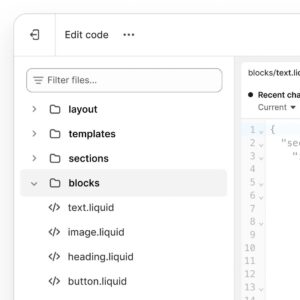
Theme Blocks are stored in the following directory:
/blocks/*.liquid
Each block contains its own Liquid markup and schema definition. Blocks are rendered dynamically using:
{% content_for 'blocks' %}
This mechanism cleanly separates content, structure, and presentation, forming the backbone of scalable Shopify OS 2.0 themes.
Why Theme Blocks Are the Future of Shopify Themes
Shopify Theme Blocks are not just a feature upgrade — they represent a fundamental change in how themes should be designed and maintained.
By moving away from hardcoded layouts and embracing modular, composable systems, developers can deliver flexible storefronts that adapt to evolving business needs while empowering merchants with greater control.
Hardcoding layouts is easy.
Designing modular systems is professional.
NITHISH SEKAR
Shopify Technical Expert | Liquid & Custom Development